Thursday, December 30, 2010

Willow

pages: 1-50
Seven months ago on a rainy March night, the main character of this book, Willow,  her parents drank a little too much at dinner and asked her to drive them home. But they never made it - Willow lost control of the car and killed both of her parents. She is now seventeen and lives with her older brother, who can barely stand to speak to her. He's married and has a daughter, and Willow doesn't feel like she belongs with them. She feels like a nuisance. She had to leave behind her old home, her friends, and her school. But she's found a way to survive, to numb the new reality of her life: She is secretly cutting herself.

Saturday, December 25, 2010

That's the problem with cutting. Once you start, you can't stop. It's addicting, cutting is my drug. It serves its purpose perfectly. "Once I cut, I forget about everything that has been wrong. All that is left is my concentration on my cut. I forget about everything but the pain. Pain has become my world."
pages 252-281 pretty much focused around this quote. 

Tuesday, December 21, 2010

Voices

pages 187-252

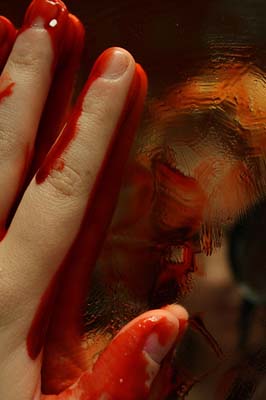
"Depression is something so unrealistic. It makes you believe these voices. You are overcome by these demons and everyone else sees through the tinted glass but YOU can see the real world, the real you, the real humanity, the real pain. The agony, you can't explain it or take a painkiller but you can just sit, unable to move or connect with reality, and you just stare, feeling anxious and nervous and ill, can't voice it, so you cut instead. That's where the real problem starts. The blood, the addiction.

This whole section of the book pretty much talked about "voices" that people suffering from depression sometimes say they hear. The voices tell them that they need to punish themselves, that they deserve the pain and suffering they're going through, and they even deserve more. That they're a failure and aren't good for anything. They can't escape the "voices" because they're so used to "listening to them". The voices come when they start over-thinking things. Once they're alone, they voices get louder and eventually the "cutter" gives in.


Friday, December 17, 2010

their eyes were watching God

pages: 1-146

In Their Eyes Were Watching God, we meet a girl named Janie. Her mother, Leafy, left her when she was just a baby, so she was raised by her grandmother, who she calls Nanny. They lived in a house in the backyard of a white family that Nanny worked for. When Janie was little she though she was white just like all the other kids she played with and was around all the time. One day a man came by the house and took a picture of all the kids together, and when the pictures were finally printed Janie looked at it and wondered where she was. She knew the spot in which she should appear, but in that place there was a little dark-skinned girl. After she asked who the little color girl was everyone laughed and it was explained to her that the colored girl was in fact her. She couldn't get over the fact that she wasn't white. Up until that point she had always just assumed she was white. I don't understand how she never realized that she had darker skin than the rest of the kids though,. I mean, didn't she ever look down at her hands or legs and realize that they were darker? As time went on, Janie married Logan Killips, Joe, and finally Tea Cake,  (who's her latest husband.) After marrying Tea Cake they move to the Everglades and pick beans and cane sugar in the fields. They get a house, and meet many interesting people.

Thursday, December 16, 2010

ER

pages 140-187

Did you know that 472,000 emergency room visits per year are the result of deliberate self-inflicted injuries? This, of course, doesn't include everyone who self-harm. Some people's self injuries either just aren't bad enough for them to need to seek medical attention, or they're too scared of someone finding out about their self-injury to bring themselves to go to the hospital to get their injuries treated.

Monday, December 13, 2010

Why?

pages 79-140

Believe it or not, most cutters don't blame anyone else but themselves for what has happened to them to cause them to start the cutting. Why? Because most feel like they deserve everything they've experienced. If they've been abused, they get it in their heads that they did something to deserve it. If they're sick, they believe God is punishing them for something bad they've done. You could tell them that they've done nothing wrong as many times as you want, but it's not going to change anything. They're not going to believe you. They have permanently embedded that it's their fault into their brains. Another weird conclusion some self-harmers come to is that their scars are beautiful, every single one of them. Some see them as mile markers they've gotten past, and others view them as reminders that they have the power to hurt themselves whenever they please.

Wednesday, December 1, 2010

pages: 68-79

Most start out with one tiny scratch, but then the need to go deeper increases as time goes on. The first time most people cut they love the "release" they feel, but afterwards feel like what they have done is insane, and they are crazy. They go on to have cutting bouts, which are generally set off by real, or even perceived experience. Their sense of themselves and the ability to control their lives has been dictated so much by external events that they believe their existence depends on how others see them. They often see "nothing" when looking in the mirror, just a body empty of a soul.

Sunday, November 28, 2010

self-mutilization in animals

pages: 44-68

Researches that focus their careers around exploring the act of self-injury have discovered that animals, just like humans, experience extreme disruptions in parental care early in life. Phycologist Harry Harlow and his wife, Margaret, found that when a baby laboratory monkey is separated from it's mother during the first year of it's life, it becomes excessively fearful and engaged in self-mulitizating acts. Such acts were biting themselves, head banging, slapping themselves in the face, and even trying to chew off a limb. Like many self-harmers, the lab monkeys also engaged in repetitive behaviors to calm themselves when no one else was around to help them. They huddle in corners, rock back and forth, and even hug themselves.

Friday, November 26, 2010

Cracking the Secret Code

pages 27-44

Fifteen-year-old Lindsay remembers the exact date she started cutting for the first time. She had a horrible week, one like she had never experienced before. Although she had been depressed on and off again since she was only twelve, she had never resorted to anything as extreme as self-mutilization. In Lindsay's family appearance was everything. Her parents were so concerned with how they looked to others, not matter how Lindsay was actually feeling she had to "act happy." Most self-harmers do this, though. They don't want the people around them to figure out how horrible and alone they really are.

Thursday, November 18, 2010

Cutters

"Cutters" defined as people who use their own skin to change their moods, to achieve a little-understood state of psychological awareness through intense pain, and to communicate a message. They use objects such as razor blades, knives, shards of glass, needles; pretty much anything sharp they can get their hands on. Sometimes these "cutters" take the blade to their skin once every couple months, once every week, every day, and sometimes even more frequently. Most are secretive about it, making sure no one, not even their family and closest friends, know anything about their battle with self-harm. In most cases this is because they're scared of being seen as crazy, psychotic, and most of all, attention seeking. Studies have shown that most cases of self-harm start in adolescence, and mostly occur in children with chronic illnesses and a history of abuse of any kind. People who know little or nothing about self-harm, or just dismiss it as something people do for attention talk about people cutting their wrists, but a lot of "cutters" make sure to make their marks remain unseen to people on a daily basis. Such places often include their ribs, thighs, back, and even abdomen.

Wednesday, November 17, 2010

Quilted Flesh

Pages: 19-27

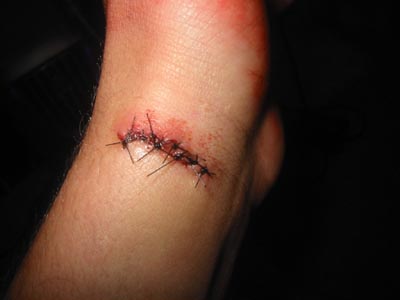
Fran, a fifty-three year old mother from New York describes her cutting next. She says, "Cutting without drawing blood is like having salad and yogurt instead of steak and potatoes." Fran lives in one of New York's most exclusive neighborhoods, with snotty rich neighbors who look down upon such things as self-harm. She's been burning and cutting herself ever since she was 23, which would mean that she has been facing her on going struggle with self-destruction for over 30 years, but, there have been 9-month periods in between in which she has been able to stop. During these 9-month periods she went through her two successful pregnancies. Most self-injureres have all the desire to stop, but they've just become so addicted to harming themselves that they can't just get up and stop all together at once. Fran, on the other hand, has no desire whatsoever to overcome her self-harm. As she looks at the scars on her arms she sees them as "patchwork quilts." Things once got so out of hand that Fran ended up having to get a skin graft as a result of her burning her arm so badly. She's been in and out of the emergency room countless times, requiring stitches for her cuts in most cases. Once she cuts, Fran sometimes finds herself drawing pictures with the blood that has seeped out, including Stars of David, swastikas, and the numbers "666."

Monday, November 15, 2010

Blood Sisters

pages: 1-19

The book I am reading is called A Bright Red Scream by Marilee Strong. It contains many different stories involving many different people, as well as explanations by phycologists. Sixteen-year-old Melanie had been cutting and burning herself for the past three years. She wanted someone to notice how much she was hurting inside. When her father finally noticed what she was doing instead of trying to get help for his daughter he showed her "the more deadly way" to slash her wrists. According to Melanie this was just the kind of wicked humor he had. She can't bring herself to hate her father for what he has done, instead, she keeps telling herself that he is a "great guy deep down." As if this wasn't enough for the family, Melanie's sister Jennifer took up cutting a year ago. Melanie blames herself, but I would too. Anyone the girls have ever told about their self-harm have simply put it aside as attention seeking or disgusting.